In today’s competitive digital economy, successful products are no longer built by isolated teams working in parallel. The most resilient and high-performing organisations recognise that Product Design and Product Management must operate as a unified force. When these two disciplines collaborate deeply, businesses gain clearer product strategy, faster execution, stronger customer alignment, and greater short- and long-term stability.
Too often, organisations treat Product Design as a delivery function and Product Management as a decision-making function. This separation creates misalignment, slower feedback loops, and fragile products that struggle to scale. By integrating UX Design, UI Design, User Research, Product Roadmap planning, and Agile Product Development, companies unlock a more sustainable and adaptive approach to growth.
This article explores why combining Product Design and Product Management is no longer optional, how their roles differ, and how their integration directly supports business objectives across the entire product lifecycle.

Credit: Fre Sonneveld
What Is Product Design
Core Roles in UX Design, UI Design, User Research, and Prototyping
Product Design focuses on shaping how a product feels, functions, and delivers value to users. At its core, Product Design ensures that customer problems are understood and solved through thoughtful experiences grounded in evidence and usability.
Key responsibilities within Product Design include UX Design, UI Design, User Research, and Prototyping. UX Design defines how users move through a product, mapping flows and journeys that reduce friction and improve clarity. UI Design focuses on visual hierarchy, accessibility, and consistency, ensuring interfaces are intuitive and usable at scale.
User Research is the foundation of effective Product Design. Through usability testing, customer journey mapping, and qualitative interviews, designers uncover real user needs rather than relying on assumptions. These insights are translated into wireframing and rapid prototyping, allowing teams to test ideas early and minimise risk.
When Product Design operates in isolation, insights often arrive too late to influence strategic decisions. However, when embedded within Product Management workflows, design insights directly inform feature prioritisation, MVP development, and long-term product direction. This alignment ensures that products are not just usable, but strategically viable.
Understanding Product Management
Product Strategy, Product Roadmap, and Agile Product Development
Product Management is responsible for defining why a product exists, who it serves, and how it evolves over time. Product managers balance customer needs, business objectives, and technical constraints to deliver outcomes that support both immediate performance and long-term stability.
Central to Product Management is product strategy. This includes setting clear goals, defining success metrics, and aligning stakeholders around a shared vision. A well-maintained product roadmap translates strategy into actionable priorities, ensuring teams focus on the right problems at the right time.
Modern Product Management relies heavily on Agile Product Development, often using Scrum methodology or Kanban for products. These frameworks enable rapid iteration, continuous learning, and adaptive planning based on real-world feedback. Activities such as A/B testing, product metrics analysis, and hypothesis validation ensure decisions are data-driven.
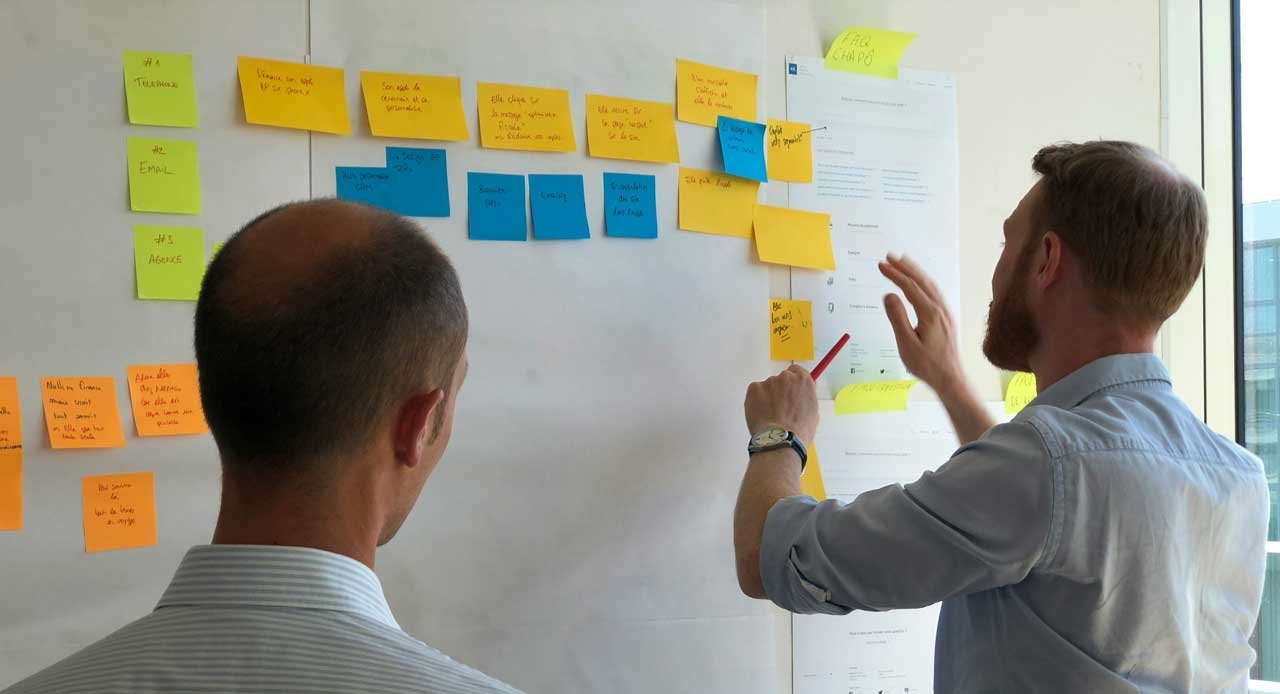
However, without close collaboration with Product Design, Product Management risks becoming overly abstract. Roadmaps can drift away from real user behaviour, and strategic decisions may lack empathy. Integrating design thinking into Product Management ensures that strategy is grounded in user reality rather than assumptions.
Credit: Sebastien Bonneval
Product Design vs Product Management
Focus Areas, Skills, and Outcomes Across the Product Lifecycle
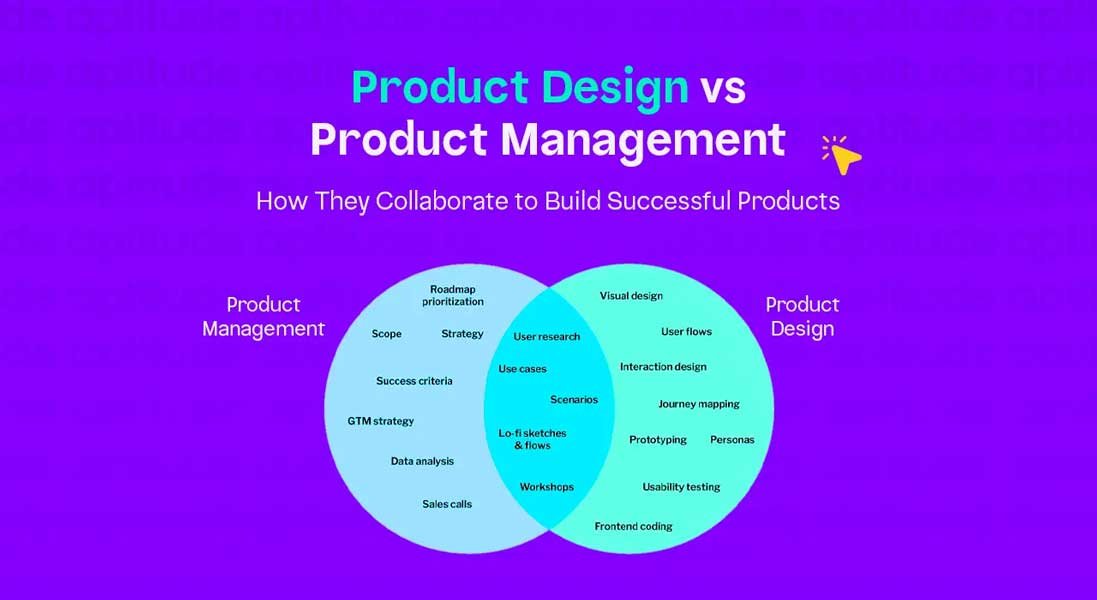
While Product Design and Product Management share the goal of delivering value, their focus areas and skill sets differ significantly. Product Design concentrates on how solutions work for users, while Product Management focuses on why and when those solutions should exist.
Product Designers bring strengths in design thinking, user empathy, interaction patterns, and visual communication. Their outputs include prototypes, validated concepts, and usability improvements. Product Managers excel in stakeholder management, prioritisation, and aligning teams around business outcomes across the product lifecycle.
The challenge arises when these disciplines operate sequentially rather than collaboratively. When Product Management defines requirements without design input, teams risk building features that meet business needs but fail user expectations. Conversely, when Product Design explores solutions without a strategic context, teams may optimise experiences that do not support long-term goals.
By combining forces, Product Design and Product Management create a shared understanding of problems, constraints, and opportunities. This collaboration reduces rework, shortens delivery cycles, and produces products that scale with confidence.
Integrating Product Design and Product Management
Benefits for Cross-Functional Teams and Business Stability
The integration of Product Design and Product Management delivers measurable benefits across both short- and long-term business objectives. In the short term, teams move faster with fewer hand-offs, clearer priorities, and stronger alignment. In the long term, products become more resilient, adaptable, and strategically coherent.
High-performing organisations embed designers and product managers within cross-functional teams, working alongside engineering and data. Practices such as design sprints, shared discovery sessions, and continuous user research ensure insights flow seamlessly into backlog refinement and roadmap decisions.
This collaboration strengthens MVP development by validating assumptions early and avoiding over-engineering. It improves feature prioritisation by balancing user value with business impact. Over time, it supports stability by creating a feedback-driven culture where learning compounds rather than resets.
When Product Design informs strategy and Product Management respects design insights, organisations build products that customers trust, and teams can sustain.
Credit: Aptitude Digital
Why This Integration Matters for Long-Term Product and Business Success
Combining Product Design and Product Management is not about merging roles; it is about aligning intent. Together, they form the connective tissue between user needs, business strategy, and execution. This alignment is what transforms short-term wins into long-term success.
In an environment of constant change, businesses that integrate design and management are better equipped to adapt, innovate, and remain stable. They reduce waste, increase customer satisfaction, and build products that evolve with purpose rather than react to pressure.
Conclusion
If your organisation is serious about building durable products and a clear product strategy, it’s time to stop treating Product Design and Product Management as separate silos. Start fostering true collaboration today, align discovery with strategy, empower cross-functional teams, and invest in shared ownership of outcomes.
Explore more product leadership insights, frameworks, and practical guidance at https://gavthepm.com, and begin strengthening your product foundation now.