Anthropic's newest product doesn't just generate images, it treats code as the universal medium for all visual work. Here's what that actually means for your workflow.
Claude Design is a new Anthropic Labs product that lets you collaborate with Claude to create polished visual work like prototypes, slides, one-pagers, and more.
Anthropic is no longer just building a chatbot. It is building the operating system for knowledge work.
With the release of Claude Design, the picture is now complete: Claude Code for developers, Claude Cowork for complex documents and agentic tasks, and now Claude Design for the visual layer. It launched this week as a research preview, powered by the newly released Claude Opus 4.7, Anthropic's most capable vision model to date. It's available now for Pro, Max, Team, and Enterprise subscribers.
The core idea is elegant and disruptive: code is now the universal medium for design. Whether it's a video, a slide deck, or a mobile app, it's all just HTML, CSS, and JavaScript under the hood. And Claude makes generating that code feel like having a conversation.
Here are the five use cases that stood out and what they actually mean for your work.
Animated Videos: From Prompt to Production (Use case 01)
What it does
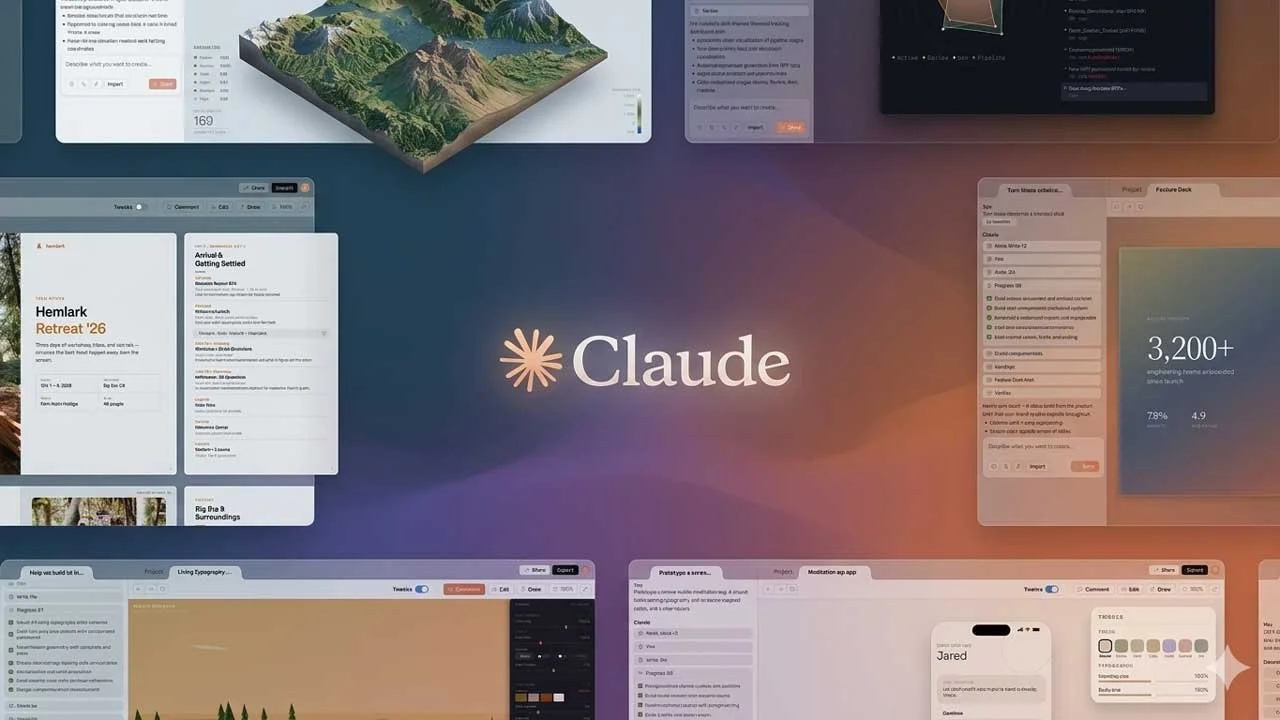
The most striking capability is treating video not as a file to be exported, but as "live code", HTML, CSS, and JavaScript that Claude renders directly in the browser. You feed it a product announcement or a blog post and ask it to make an animated video.
Claude will ask clarifying questions about tone, length, and visual style before generating a high-fidelity animation with smooth transitions and illustrated elements. Because it's code, changing the colour palette or swapping out text is instant, no re-rendering, no waiting.
Why it matters for you
If you've ever wanted to turn a blog post or LinkedIn article into an eye-catching animated explainer, this is the closest thing to a one-click solution we've seen. The blank page problem is gone.
The Video-First Slide Deck (Use case 02)
What it does
Standard AI slide generators are boring. They produce static layouts that look like every other deck. Claude Design has an elegant workaround that changes the equation entirely.
Don't ask for a deck first. Ask Claude to create an animated video of your content. Once you're happy with the motion and visual language, follow up with: "Convert this into an animated slide deck I can manually toggle through."
The result retains the high-end transitions and visual flair of the video while giving you full control as a presenter. It's the kind of output that used to require a motion designer and half a day.
Why it matters for you
For anyone pitching investors, leading a team workshop, or presenting at a conference, this workflow raises the production standard significantly without adding time to your prep.
Rapid Landing Page Iteration (Use case 03)
What it does
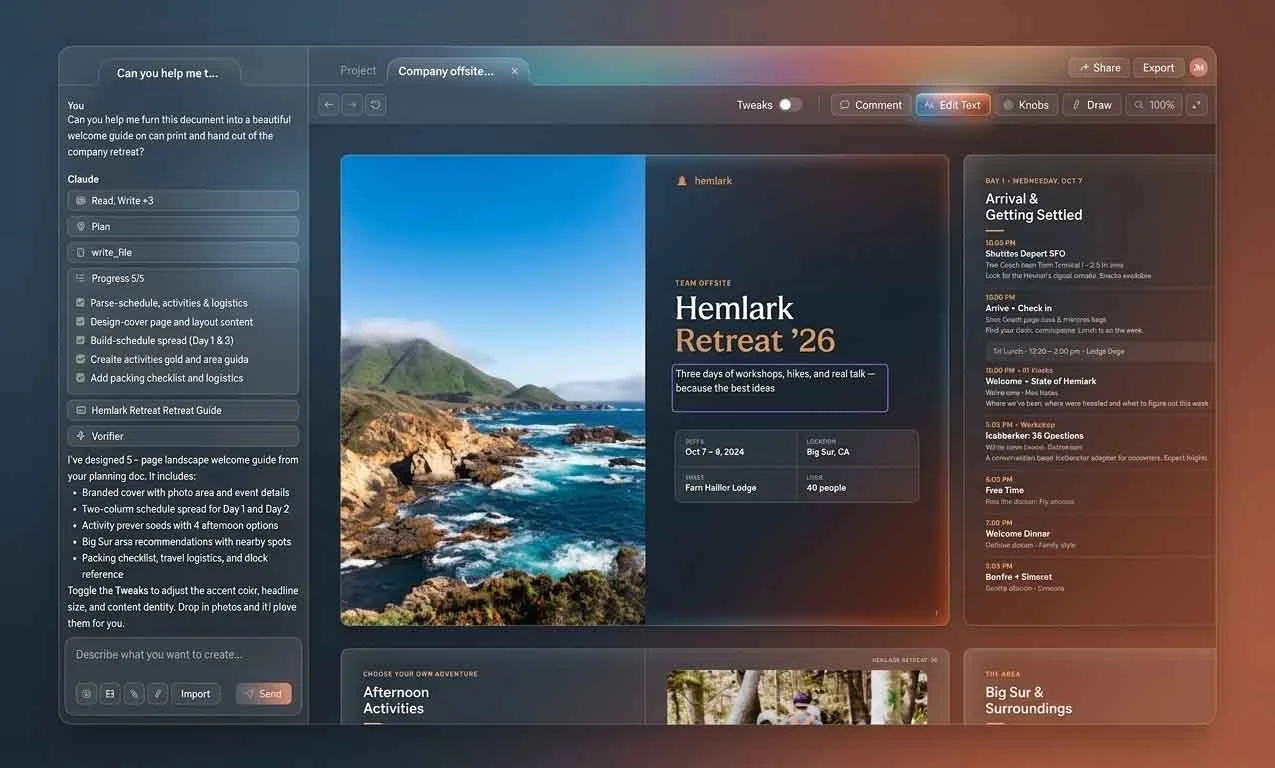
Claude Design can recreate or iterate on web pages with impressive accuracy, capturing the layout, hierarchy and visual rhythm of the original from nothing more than a URL.
But where it gets genuinely useful is in creative iteration. You can take any page and request an alternate version: a completely different tone, a dark-mode redesign, a more premium feel, or a stripped-back version for a different audience. Claude doesn't just change the colours, it rewrites the copy and adjusts the entire feel to match the brief.
Why it matters for you
You can now pressure-test a landing page idea in the time it used to take to write a creative brief. That's a genuinely different relationship with the design process.
Interactive 3D Graphics and Generative Text Effects (Use case 04)
What it does
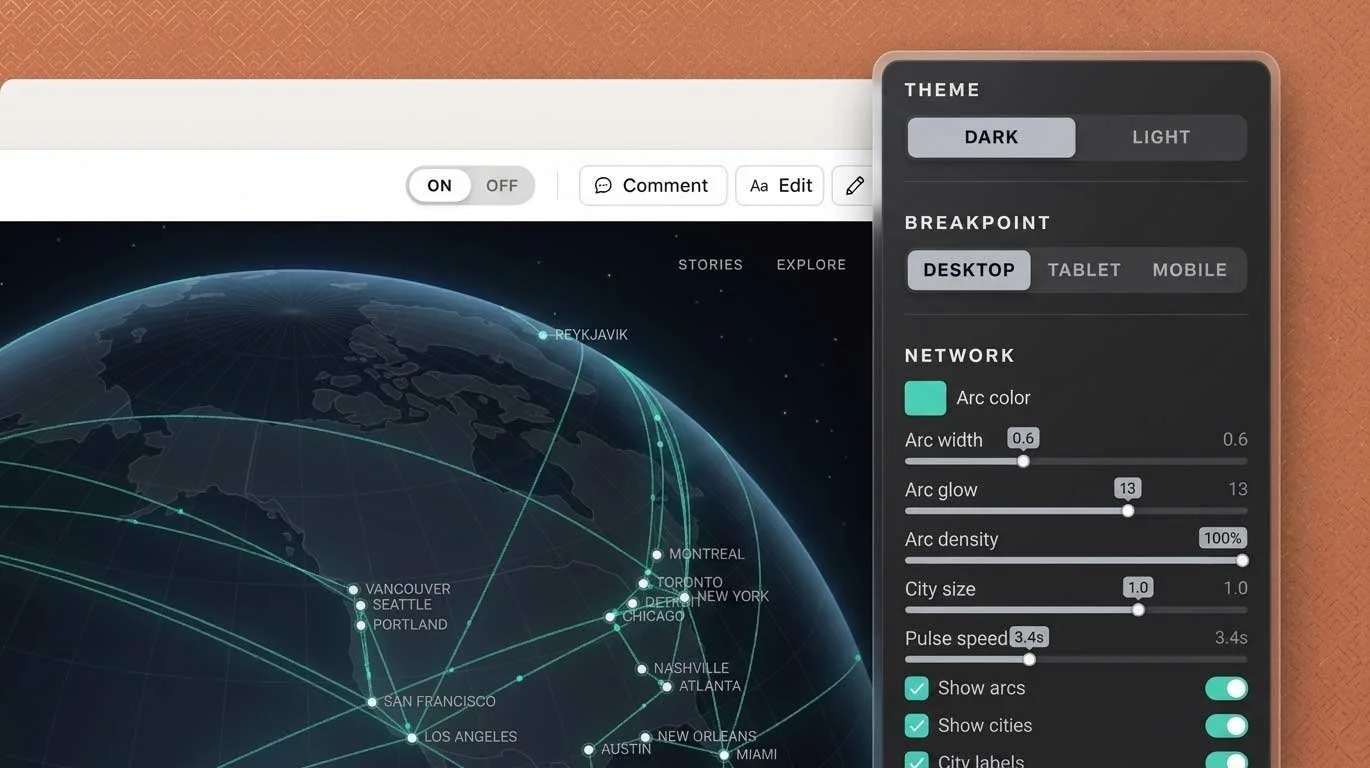
This is where Claude Design starts to feel like a superpower for non-developers. You can describe a rotating 3D globe showing data flows between cities, for example and get back a functional, interactive web element. Not a static image. Something you can spin, zoom, and embed.
Even more striking: imagine a text input that renders animated effects based on the words you type. Type a word that evokes movement or energy, and the text responds to it visually. This is the kind of creative output that previously required a specialist developer and a detailed brief.
Why it matters for you
Interactive graphics have always sat behind a developer paywall. That paywall is now gone. The question is what you'll build with that access.
Mobile App Prototyping and Design Systems (Use case 05)
What it does
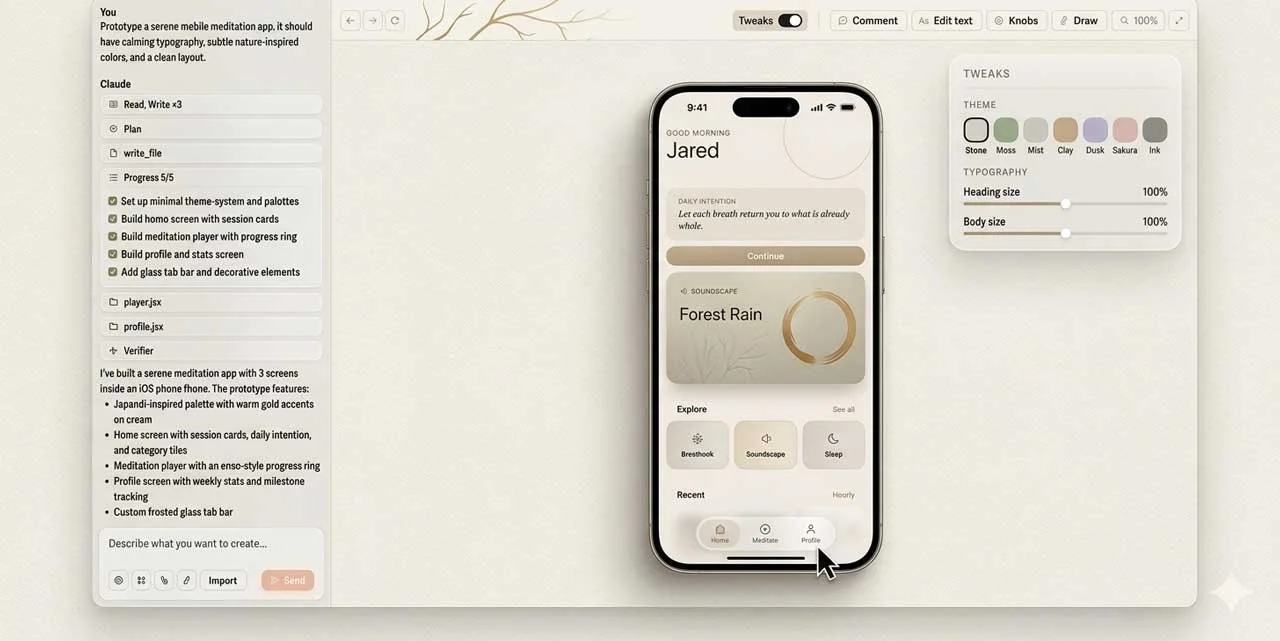
Building a mobile UI prototype typically means a dedicated design tool, a designer, and several review cycles. Claude Design compresses all of that into a single browser session.
Claude can build a functional, clickable app from scratch and when it spots a problem with its own output, it fixes it automatically. Anthropic has built what they call "play-testing" into the tool: Claude takes a screenshot of what it has built, identifies UI issues and corrects them before handing the result back to you.
The design system's capabilities are what make this enterprise-grade. You can upload your own brand guidelines, your actual Figma files, codebase, fonts and assets and Claude will apply them consistently: correct typography, spacing, and component behaviour throughout the entire build.
When you're ready to move from prototype to product, you can hand the design off directly to Claude Code to turn it into working software.
Why it matters for you
For product managers, founders and solo builders, the gap between "I have an idea" and "I have something to show" has just collapsed. The ability to go from concept to branded, testable prototype in a single session is a genuine shift in how product work gets done.
The 90/10 Rule and What It Actually Means
Claude Design is not here to replace designers. It's here to replace the blank page.
We're entering an era where AI handles the first 90% of the heavy lifting, the layout, the boilerplate, the initial animations and the first draft of a design system. The human's job becomes the final 10%: the brand soul, the specific nuances, the creative judgement that only comes from knowing your audience.
For solo builders, product managers, and founders, the barrier to "high-end design" has effectively disappeared. The question now isn't whether you can access these tools; it's whether you have a clear enough point of view to direct them well.
That's actually a more interesting problem. And arguably a more human one.